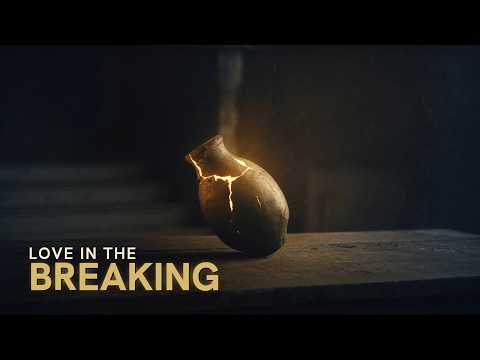
Holy Week has so much to say about the Kingdom of God, its King and our place within this Kingdom
Read the transcript
Hey, welcome to Kingdom Offerings. This is the podcast environment of 100 Full Ministries. My name is Dave Scherrer. I get to be the President and Founder of 100 Full Ministries and today we're going to talk about the fact that the King is coming. In fact, I can even see Jesus. So on these podcasts, we like to unpack the offerings of scripture with a special emphasis on the biblical texts that celebrate and advance the gospel of the Kingdom. These Kingdom Offerings, they help us understand the King himself. So if you've been hanging around our podcast, you know that we just finished a series on the gospel of the Kingdom, trying to wrap our mind around this kind of amazing and wondrous, very good news. And as I said the last time we were together here, we've got a lot more years ahead of deep conversation before we get close to truly plumbing all of the riches of that deep gold mine that is the gospel of the Kingdom. So I need you to stay tuned, but we're going to turn our direction to a new topic this morning and we're going to let that be a series for a few weeks. It's new, but it's not unrelated, of course, to the gospel of the Kingdom. I mean, after all, everything is about the gospel of the Kingdom, right? So I recognize that you may be tuning into this podcast at any time of the year, in November or August, but in my life, just now, I just finished celebrating another Holy Week and another Resurrection Sunday. You see the King of Kings now is triumphantly being celebrated, and as he enters the city he's then murdered, and then, of course, he's raised from the dead. Holy Week, I'm telling you, you can't make these things up. The majesty of Palm Sunday, I want to talk about that this hour, I think so much is lost on us. In my life, Palm Sunday, Good Friday, Resurrection Sunday, they all just happened, and I want to enjoy the wonder of Easter with you in a fresh way, because Holy Week has so much to say to us in understanding the Kingdom of God, the Kingdom of God's King, and our place within that Kingdom. So here's kind of how I feel about it, there's no way that our 21st century can recreate the cultural climax, the emotional vigor of Palm Sunday in the 1st century. Frankly, for those of us who are kind of long-time churchgoers, we know that Palm Sunday is kind of, yeah, it's fine, it's great. The little kids come in, they march around with small little branches and they wave them, they're probably not palms, and the rest of our adults, the kids walk by and they hand us palm branches, and the music's playing, and the kids are dancing and they're waving the branches, and they tell us adults to wave them, and by and large we don't do that. The kids are dancing, we're standing a little awkwardly, shifting our weight from one foot to the other, maybe holding our little palm branch in the air, maybe not. Frankly, I think we feel a little childish, and so Palm Sunday is great, it's cute, not necessarily for me, it's kind of for kids, right? So I want to try and stir your imagination a little bit. I want to go back in time. So it's spring in Palestine, the air is brisk, it's a cool spring day. The mountain air is filled with anticipation. It is the time of the great Passover feast in Jerusalem, and that's always held in the Jewish month of Nisn, generally that falls in April in our calendar. The streets of Jerusalem are abuzz with the news. Turns out people are saying, hey, Jesus may show up in Jerusalem, and he may be the king of Israel. Normally, only about 50,000 people, if that many, live in Jerusalem day by day, but for Passover there would be maybe 300,000, five, six times as many people as live there that come to enjoy Passover in the holy city of David. So you may not have a place to sleep, you'd be sleeping on the streets, except you probably can't get any sleep anyway because you're anticipating the fact that Jesus may show up, this mysterious man who has turned the nation upside down. Stories are being told. People have seen it with their own eyes, and those that didn't see it have been told the stories. You see, we're hearing that he has healed lepers. He's touched lepers. Jesus has given sight to the blind, even those who were blind from birth. No one does that. There is speech to the dumb, sound to the deaf. He boldly offers forgiveness to the sinful. He has stilled the winds. He has cast out demons. He has walked on water. He made water into wine. He taught with remarkable authority about the kingdom of God as though he had inside information of what happens in the throne room of God. In fact, just a couple of weeks ago, it seems he raised a man, a guy named Lazarus from the grave, not just dead, four days dead. I'm telling you, this man, Jesus, he's going to send the Romans running with a wave of his hand if he wants to, and the people are on the lookout. They were mad with excitement. The Messiah, the one that they had waited for for over a thousand years, the descendant of David, is finally coming to claim the throne of the kingdom. Maybe it's going to happen right now in my lifetime. Me and my family are going to watch it happen. It's so real, it almost hurts. But of course, like every great drama, there's a devious kind of evil back story. You see, this is happening in the background and the people of Jerusalem don't even know this story exists. It's a play within a play, I guess. The religious leaders of that day, the Sadducees, Pharisees, scribes, they frankly think that this Jesus is a criminal. Worse than that, they think he claims to be God. Can you believe that? He said that he was the bread that came out of heaven. He was the resurrection. He was the living water. He was the way to everlasting life. He said all that about himself. He said that no one comes to the Father but through me. Wow. In fact, he claimed to be the holy I Am. So this is a great story, right? There's a hero, there are villains, there's betrayal, lavish worship, children's waving palms, adults waving palms. We don't do that. This is the moment that all creation has been waiting for. Even the angels are watching from their heavenly bleachers with bated celestial breath, wondering what's going to happen next. You know what's crazy? Even the geography and the architecture wants to get into the play. Even the geography and the architecture, it's crazy, wants to get into this play. You see, if you were to look down on the Temple Mount of that day, you can see that it was situated on the mountain just to the east of the Mount of Olives. The eastern wall of the city would be on the ridge of the Kindron Valley. From there, a person standing on the Temple Wall and on the wall of the lower city could look out to a perfect view of the Mount of Olives, a vantage point where they could easily see the processional of Jesus coming riding on a donkey colt. The long processional of a mile or more could be easily seen from these walls, and so thousands would be able to see Jesus approaching the city. And then the stories would go out, thousands more would hustle down from the city to join the parade. It's obvious that the King is coming. So I want you to imagine a city parade for a Super Bowl team or a World Series team, and the whole city has turned out and they are crowding and shouting. That's the image that you should have in your mind. So here he comes, the Messiah, here now, in my lifetime, riding on a colt just like it says in the scriptures. However, there is something going on that you might not know, or maybe you do, but there is actually a third story that's happening, a play within a play within a play. Shakespeare's got nothing on God's storyline. You see behind the scene, frankly unseen, there are spiritual powers at work. C.S. Lewis calls it deep magic. You see, the thousand-year-old prophecies are being fulfilled. The fact is, Jesus will not live through the week. He will not be made king by the people because evildoers are conspiring to kill Jesus and he will die. But here's the plot twist. The evildoers, actually, they will not murder him. Jesus will die, and the Pharisees will think that they caused his death, but Jesus will not actually die at their hands, not even at the hands of the Romans, no, Jesus will lay down his life as a willing sacrifice for me and you. John the Baptist, how did the baptizer put it? Behold, the Lamb of God who takes away the sin of the world. This is amazing as we work our way from Palm Sunday to Good Friday. John records that the Jewish leaders wanted to eliminate Jesus before the evening Passover meal on Friday, and so according to Jewish regulations, the slaughter of the Passover lambs began in the temple at three o'clock in the afternoon on Friday. They were supposed to be eaten after nine o'clock, so thousands of lambs would be slaughtered in the temple for Passover at three o'clock in the afternoon on Friday. But Luke tells us that Jesus died on the cross in the ninth hour, three o'clock on Friday, the very moment the chief priests were sacrificing their Passover lambs, the ninth hour. Actually the chief priests of the temple had no idea that in some mysterious way by getting Jesus convicted and killed on a cross, they were in effect setting up the Passover sacrifice to God that would for once and for all do away with the animal sacrifices. As Paul wrote, Christ, our Passover lamb, has been sacrificed. So let me refresh our memories of this triumphal entry. It's found in Matthew chapter 21. It reads, they were approaching Jerusalem on the Mount of Olives and Jesus sent two disciples ahead saying, go to the village ahead of you and find a donkey tied there with her colt by her, untie them, bring them to me, and if anyone says to you, hey, it's okay, the Lord needs them. So this all took place because of what was spoken through the prophet. Say to daughter Zion, that would be Jerusalem, see, your king comes to you gentle and riding on a donkey and on a colt, the fowl of a donkey. Jews would know that this was a prophecy about their Messiah coming in peace to be their king. The disciples did this and they brought the donkey and the colt and placed their cloaks on them for Jesus to sit on a very large crowd. They were watching from the temple walls in such anticipation, they came running down, they spread their cloaks on the road and while others cut branches from the trees and spread them on the road, the crowds went ahead of them shouting, Hosanna, Hosanna to the son of David, blessed is he who comes in the name of the Lord, Hosanna in the highest. Hosanna, of course, that means God save us. The crowds continued to shout and when Jesus entered Jerusalem, the whole city stirred and people asked, who is this? And the crowds would answer, the crowds would ask, the crowds would answer, this is Jesus, this is the prophet from Nazareth in Galilee. Jesus entered the temple courts and drove out all who were buying and selling there, he overturned tables and he said, it's written, my house will be called a house of prayer and you're making it a den of robbers, so he's not making any friends with the Pharisees and temple guardians in this moment. You see, the blind people were coming to him, the lame came to him and he healed them on this day. The chief priests and the teachers of the law saw the wonderful things that he was doing and the children shouting and they said to him, do you hear what the children are saying? Make them be quiet. And Jesus said, yes, have you never read from the lips of children and infants, the Lord has called forth your praise. And he left them and went out of Bethany, went away. So what we're seeing about this king is he comes in triumphantly, the people know who he is. Frankly, the Pharisees and the scribes and Sadducees know who he is, but they don't like him. They don't like what he claims. So I want to wrap up. I want to wrap up by saying that the gospel of the kingdom demands that there must be a king, right? You can't have a kingdom without a king. And from our story this morning, from this triumphal entry, I want you to keep in mind three kingdom traits that we see about this king from the very first poem Sunday. The three points are that Jesus is a confrontational king, he is a counter king, and he is a coming king. This confrontational king, you know, in the early days of his ministry when Jesus would do a miracle, he would tell people not to talk about the miracle. He would say, please don't talk about this, just go home and be quiet. Now, of course, generally speaking, they didn't do that. But I think to Jesus' point, he was trying to keep his ministry in check for a while until it came to a climax at just the right time. He, on Palm Sunday, begins to fully claim who he is Palm Sunday and into the following week there in Jerusalem, there at the temple. He is forcing the hand of the religious and civic leaders. He seems to be saying, I dare you to stop me. On the way to Jerusalem, you remember, there were some that cried out, Son of David, heal me, and Jesus, of course, heals them. He doesn't rebuke them and say, don't use that term, Son of David, because that's a messianic term. Jesus doesn't stop them because he is laying claim, he is confronting the reality that he is indeed the Messiah. So Jesus decides to write in Jerusalem and put all the questions to rest. Indeed, the people have been waiting for this king, the king of kings, the Lord of Lords. The people cry out, Hosanna, God save us, and Jesus doesn't stop them this time. The Pharisees tell him to quiet the crowd, but no, Jesus says, it's time. In fact, you know what I think Jesus is saying? He's saying, crown me or kill me, but you cannot merely like me. So we have this confrontational king who is establishing his power and authority. But we also have this counter king. What is not revealed in this biblical account is that some 200 years earlier, a fellow by the name of Simon Maccabeus had defeated the foreign armies, the occupying armies, and had set Israel free for the first time in centuries. He rode into Jerusalem on a powerful horse and people were cheering and waving palm branches for him. And now we fast forward 200 years to a new king after the Romans have come through and swept away the nation of Israel's power. And so now there is a new drama. Now the drama looks very different, the same but different, because Jesus comes in on an unbroken baby donkey. It's almost comical. He, of course, is doing this very deliberately to fulfill the prophetic scriptures, but he is also coming in to show in a counterintuitive way that he is taking power, not by killing, not by force, but by losing power and by dying. He's not going to take a false crown, a political crown. He's going to triumph through weakness, saying, my followers can only come to me by repenting and admitting their need and following. You see, we're not going to be saved by our good works or our strength of will. This salvation is through weakness, so that people can have the free grace of salvation in spite of our sins. He is a confrontational king. He's a counter king. We must not forget that he is the coming king. See the drama of the triumphant king is not over. It did not end on Palm Sunday. It didn't even end at the empty tomb. You see, we're really right now in the drama, we're in the intermission. The crowd thought that he was coming to put everything politically right, but he was coming to put you and me right with God. He is the king today, and he is the king to come. John said, I saw heaven opened and behold, a white horse who sat on it, it's called faithful and true and righteousness he judges and wages war. His eyes are a flame of fire and on his head are many crowns and he has a name written on him which no one knows except himself. And he is clothed with a robe dipped in blood and his name called the word of God. The armies which are in heaven clothed in fine linen, white and clean, they were following him on white horses. From his mouth comes a sharp sword so that with it he may strike down the nations and he will rule them with a rod of iron and he treads the wine press of the fierce wrath of God the Almighty. On his robe and on his thigh he has a name written, King of Kings and Lord of Lords. So as we keep saying, God's desire from the very beginning was to establish a kingdom. He created humankind and gave him dominion. From that time, man was placed over the works of God's hands and all creation was put in subjection under him and sadly, the garden account in Genesis 3 tells us that we failed. So when Christ utters those words on Good Friday, the time is fulfilled. He's declaring the kingdom is coming. In fact, the kingdom is breaking through. Now but not yet. The great preacher of the great New England awakening, Jonathan Edwards said, every great Christian is seeking the kingdom of God as the chief business of Christian life. So let's keep seeking the kingdom of God. Let's wrap up for today and now for the next several weeks here at the Kingdom Offerings. We'll take a good longer look at Good Friday, at Resurrection Sunday and Ascension Sunday because there is so much evidence, description, wonder of the King in this Holy Week narrative. So thanks for joining us here at 100 Fold Ministries. I'm glad you're looking deep into the gospel of the King and his kingdom. Join us again here at 100 Fold Ministries. That's 100FoldMinistries.org and we'll continue to get to know each other and this King. See you again here. This is Dave Scherrer and Kingdom Offerings.